Auditory obstruction can be disorienting, often making you feel separated from the community around you. Many people instinctively fear they’re experiencing irreversible hearing loss when, in reality, the cause may be something much simpler: cerumen accumulation.
Understanding the distinction between cerumen blockage vs. hearing loss can help you know when a quick fix is possible and when it’s time to request a hearing evaluation. There is no reason to feel stressed if sounds seem muted. While only a clinician can verify the cause, reviewing these essential markers of earwax vs. auditory decline can provide immediate insight.
Recognizing Cerumen Blockage Symptoms
Your ears produce wax as a natural protective process to preserve integrity and keep debris away from the eardrum. The trouble begins when this material accumulates to the level of a physical blockage.
Signs of a blockage often feature:
- Muted sound clarity that occurs gradually or suddenly
- The perception that there is a physical obstruction in the ear
- Localized sensitivity or localized pain in the ear
- Localized ringing within the affected ear
- Moments of sharper hearing following a yawn or eating
Because obstructions are physical, they commonly impact just a single ear at a point rather than each uniformly. Luckily, once surplus wax is safely extracted, hearing often reverts to normal instantly.
How Auditory Loss Usually Manifests
Hearing loss, especially presbycusis or trauma-based hearing loss, tends to progress gradually and doesn’t improve when the canal is cleaned.
Standard indicators of clinical hearing impairment include:
- Issues with word clarity in crowded or noisy settings
- Constantly asking people to repeat themselves
- Turning up the TV or smartphone volume louder than people prefer
- Trouble catching treble sounds like birds or soft voices
- A symmetrical reduction in hearing ability in both sides
Contrasted with earwax buildup, auditory impairment doesn’t usually cause a sensation of obstruction or pressure.
Contrasting Cerumen Blockage and Auditory Loss
While evaluating earwax buildup vs. auditory impairment, a few indicators can help guide you in the correct direction:
- Onset: Earwax issues often appear abruptly; auditory impairment develops gradually
- Duration: Wax issues are fixable and short-term, whereas impairment is usually long-term
- Symptoms: Pressure and discomfort suggest wax; speech clarity challenges indicate impairment
- Balance: Clogs are frequently asymmetrical, but permanent loss is commonly two-sided
The Risks of DIY Cerumen Removal
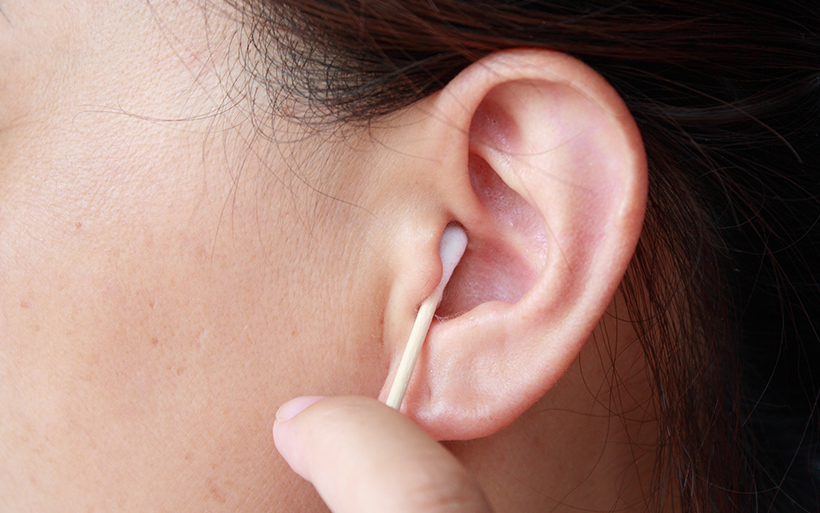
When hearing feels dampened, the instinctive desire is to use a cotton bud, but this is often a hazardous move. In truth, physical probing often compresses the wax further against the tympanic membrane, making the impaction worse.
Clinical research shows that self-cleaning often results in accidental injury or more complex impactions.
Similarly, ignoring early auditory decline can postpone care that assists in preserving communication, security, and well-being.
The Importance of a Professional Ear Exam
A brief ear exam can quickly verify if cerumen is obstructing the ear.
If a blockage is found, a clinician can clear it carefully, often returning your auditory function immediately.
If no cerumen is found, a formal audiogram will be conducted to identify the nature and degree of any hidden impairment.
Health authorities suggest seeking a professional opinion as soon as you observe hearing changes that impact your routine.
Is It Earwax Blockage or Auditory Decline?
Dampened hearing doesn’t always indicate permanent trauma.
It is often the case that a simple, resolvable obstruction is the source of the concern.
Obtaining expert attention ensures you locate the exact cause and the right remedy for your auditory requirements.
Keep in mind that home assessment is hardly a replacement for a clinical check-up when it comes to your hearing.
Getting answers early can avert unnecessary stress and ensure you obtain the appropriate treatment at the right moment.
Rather than wondering what is wrong, book a quick check-up with our specialists to uncover the truth.