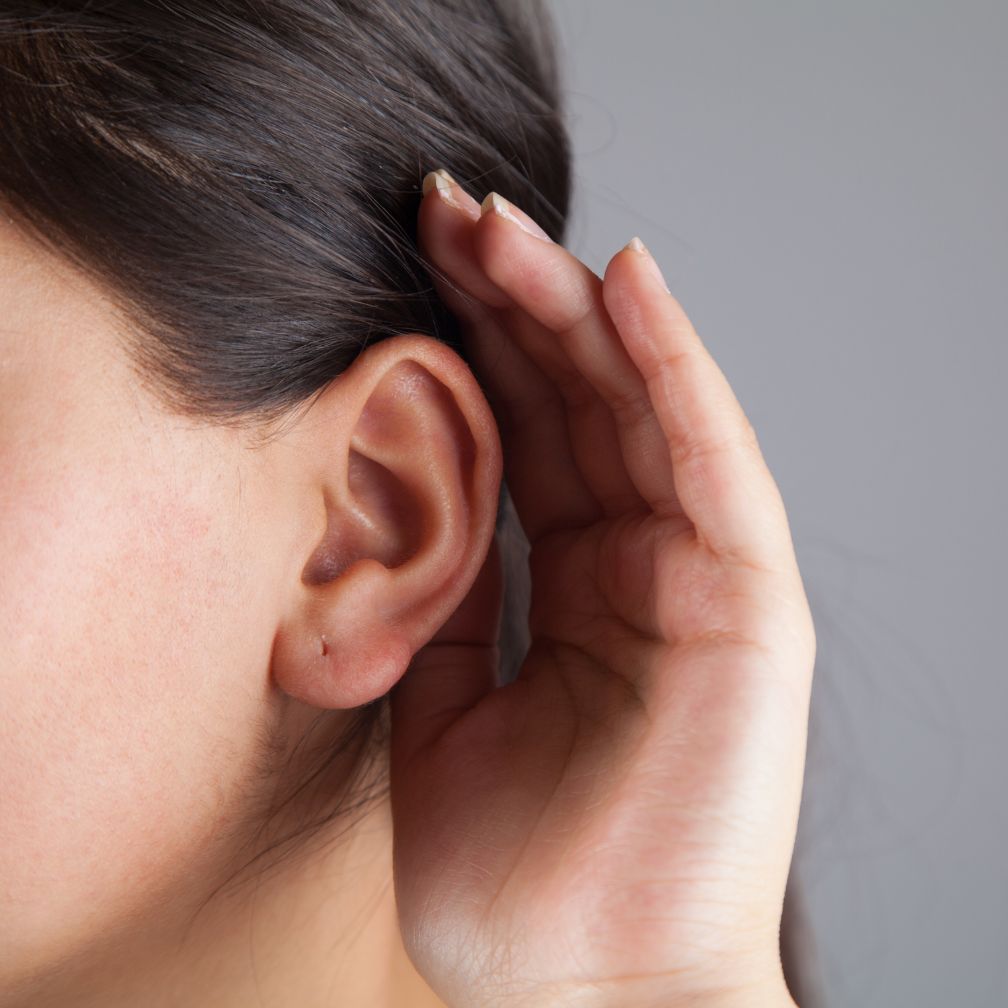
Have you noticed an unusual auditory sensation that mimics baseline white noise or a steady breeze in your ears? What explains the fact that you are the sole individual capable of detecting this frequency? Rest assured, this physical perception is definitely not a product of your imagination.
Fortunately, it’s probably not “phantom ring syndrome,” a condition where people who use cell phones excessively think they hear their phone ring, buzz, or beep when no one’s calling or texting them.
In most clinical scenarios, this localized baseline static is a direct manifestation of tinnitus. To be perfectly clear, the frequency you are tracking is completely real, and specific environmental factors can actively exacerbate your tinnitus.
You can still hear what people say. Instead, it functions as an omnipresent layer of sensory noise transposed directly on top of your standard daily hearing.
Let’s look at where this white noise comes from, what it is, and what you may be able to do to reduce or get rid of it.
The Root of Tinnitus: Why Your Brain Tracks This Persistent Hum
Physiologically, tinnitus typically serves as an early clinical warning sign of underlying hearing loss. It’s characterized by a constant or intermittent noise that sounds like it’s on top of what you hear. Based on your specific audiological subtype, the internal static might remain completely unobtrusive throughout your normal routine. For others, however, the unremitting hum inside their skull feels utterly deafening, causing massive psychological distress and exhausting their patience.
Most patients frequently fail to find words that accurately convey their struggle, because this subjective sensory deficit defies the imagination of anyone who has never lived it.
You might find yourself wondering how a humming noise that sounds so incredibly vivid inside your skull can have no external reality. This paradox leads many to worry if they are suffering from a central mental delusion or cognitive misfire. How can an invisible sound wave cause such a profound barrier when you are trying to comprehend spoken language from family members? Or sleeping?
Why Silence Paradoxically Amplifies Your Tinnitus Symptoms
You’ve probably noticed that the quieter it is, the worse your tinnitus gets. This structural shift happens because the internal hum doesn’t have to fight against real-world sound waves—as seen when people lock down their bedrooms for total quiet at night. They operate without a television background feed, avoid running any radio streams, and eliminate all ambient audio. If you combine a silent room with late-night introspection, the moment your awareness drifts to the localized humming, it transforms into an inescapable focus point that artificially amplifies the distress. Regardless of whether your specific symptoms involve low-frequency hums or high-pitched squeals, a perfectly silent evening environment provides the ideal clinical conditions for tinnitus to dominate your focus.
Is that weird sound like wind really tinnitus?
Not only is tinnitus hard to explain to someone who doesn’t have it, but this condition can also become complicated when you try to talk to someone else who is suffering from tinnitus. They could live with a pulsing beat while you hear steady white noise, a variance that often causes patients to falsely assume their own case falls outside the bounds of standard tinnitus.
Yet, despite these tonal differences, your underlying diagnosis remains highly probable. This is due to the reality that tinnitus is a highly polymorphic condition, expressing itself through a vast array of acoustic shapes depending on the individual. Individual experiences cover a broad acoustic spectrum, including regular perceptions of:
- The harsh hiss of old-fashioned television static
- A resonant, steady internal humming tone
- The constant drone of a swarm-like buzzing noise
- The classic, crystalline ringing tone deep within the ears
- An episodic, heavy thumping localized behind the eardrum
- A flat, continuous telephonic dial tone
With rare exceptions, this internal static is entirely subjective, meaning no outside observer can measure or perceive the sound. Therefore, asking a general practitioner to audibly detect your internal static is a medical impossibility. Out of medical necessity, your healthcare provider must rely entirely on your subjective self-reporting to establish the history.
Unfortunately, this clinical gap frequently leaves patients feeling misunderstood or dismissed by general practitioners who lack dedicated training in audiological medicine.
Sharing his experience, a steelworker named Thomas noted: ‘When the internal ear static first became chronic, I sought help from my primary care provider. Although the clinician noted that it was likely a case of tinnitus, he didn’t seem to comprehend how destructive the noise was to my focus.’ He treated the problem as if it were an insubstantial issue that I could easily ignore. He essentially told me to push it out of my mind, leaving me with zero actionable treatments or relief options.’
Speaking with a specialist can help solve this problem and can help identify solutions. Sometimes the sound itself can offer clues as to how to treat it.
Investigating Vascular Variations: Rushing and Whooshing Frequencies
Accurately communicating your history is inherently challenging because the disorder utilizes an incredibly vast array of acoustic profiles across different patients. For example, if you hear a whooshing sound or a thumping sound in your ears, which is then followed by a steady series of beats that mimics your pulse, you may actually have a rare type of tinnitus called pulsatile tinnitus.
Fortunately, pulsatile tinnitus often yields a much higher cure rate than standard subjective tinnitus because it typically originates from identifiable structural health conditions, such as systemic hypertension or localized arterial narrowing.
That whooshing sound can also be brought on by the flow of blood through narrow veins in your head, which is called a bruit. You must prioritize an immediate specialist workup for any pulsing noise, because in specific clinical contexts, that sound warns of a critical cerebrovascular risk that could lead to an unexpected, fatal stroke.
The Auditory Reality of Pulsatile Symptoms: External Verification Options
Tinnitus is a genuine – and quite annoying – condition. While it often can’t be diagnosed, there are rare instances that concern pulsatile tinnitus, where a hearing specialist trained to treat tinnitus can use instruments like a stethoscope to hear what you’re hearing. But remember that this only occurs in cases of pulsatile tinnitus, which is far less common than the typical form of tinnitus.
How did I get tinnitus? What caused this humming noise in my head?
The leading catalyst for permanent sensorineural ringing is a timeline of consistent exposure to acoustic trauma or loud environments. This explains why the disorder is highly prevalent among professional musicians, concertgoers, and industrial laborers who operate within loud environments for consecutive hours over several years.
Several specific employment sectors generate high enough decibel baselines to directly induce permanent tinnitus, including:
- Factory Work – You’re around noisy machines all day long, so that’s got to do something with your senses, right? On top of the noise, factory work can be stressful, which is another factor that leads to tinnitus and, over time, can make it much worse. Do you work near a pneumatic riveter? They are some of the worst, clocking in at over 125 decibels, which is loud enough to cause immediate, permanent hearing loss, as well as severe cases of tinnitus.}
- Agricultural Industry Operations – Forget about the traditional sounds of nature. Although a rooster can produce a piercing 90 decibels in the morning, the heavy equipment utilized on a modern farm is infinitely more hazardous to your ear health. Operating tractors, managing combines, running cherry-pickers, or working alongside automated milking networks subjects your ears to extreme decibel wear. Even simple carpentry repairs can cause harm, as a typical table saw operates at over 85 decibels, causing steady auditory decline without ear protection.}
- Aviation – A commercial jet propulsion system generates a staggering 140 decibels of acoustic energy, even from a distance of a hundred feet. While professional aviators generally wear protective communication headsets, pilots of small or regional aircraft operate right next to the engine firewall. No passive or active headset is completely capable of shielding the inner ear from this intense, vibrating sound pressure, meaning your hard-earned flight hours are simultaneously causing gradual, permanent sensorineural damage.}
- Motorcycle Cop – You don’t have to be a police officer to ride a motorcycle, but any job that has you riding around on this noisy vehicle all day puts you at risk of developing tinnitus and eventually losing your hearing. The same goes for snowmobiles and jet skis…though chances are you’re not riding these vehicles at work unless you have a very interesting and, let’s face it, fun job.}
- Bartenders and Service Staff – Trying to hear a customer call out an order over a crowded bar requires immense concentration from your brain’s processing centers. The background music in entertainment venues is frequently pushed to dangerous decibel levels, making it impossible to hear a person standing directly in front of you and forcing your ears to strain constantly against the noise. When the lounge features a live musical act or a club DJ, your hearing paths sustain identical structural wear to the performers on stage.}
In all of these instances, the tiny hairs inside the inner ear were damaged by constant exposure to loud noises. These specialized cells act as the body’s natural microphones, capturing frequencies and allowing your mind to comprehend speech and music. Tragically, unlike your skin or bone tissue, these specialized sensory receptors lack the biological capacity to regenerate or repair themselves, leaving you with permanent deficits and a distorted auditory perspective.
Identifying Common Triggers That Exacerbate Tinnitus Intensity
While sound exposure remains the primary cause, several everyday health and environmental variables can drive up the volume of your internal ringing.
- Mental Health Challenges – Living with generalized anxiety or depression creates a highly frustrating catch-22 scenario. The moment your stress or mood drops, your neurological sensitivity to the ear ringing spikes, which immediately causes your psychological distress to worsen in response.}
- Neglecting Auditory Self-Care – Your ear pathways signal distress through pain or fullness when environmental sound hits dangerous thresholds. Do not simply ignore the warning signs or push through the noise; prioritize ear protection, because your baseline hearing cannot be restored once it is lost.}
- High Blood Pressure – Unmanaged hypertension can cause severe micro-circulatory issues, starving your cochlear architecture of oxygenated blood. This fluid restriction causes an immediate surge in the loudness of your tinnitus and can compound your long-term hearing degradation if left untreated.}
- Smoking and Tobacco Use – The chemical dependency and restlessness that develops between nicotine doses directly amplifies your internal ear noises. While smoking another cigarette appears to calm the symptoms temporarily, it is actually accelerating the core damage by damaging the micro-vessels that support your hearing pathways.}
- Some foods – Some people find that caffeine and artificial sweeteners make tinnitus worse. Keep a food journal to track everything you eat, along with your tinnitus level, to find out which foods make your symptoms worse.}
- Some people – Being around certain people, especially people with a very negative outlook, can make tinnitus worse because it triggers high blood pressure, anxiety, and depression. Consider relationships that may be doing you more harm than good and decide if they’re important enough to risk your hearing and health. Remember, you can’t change other people, but you can choose to be around them less often.}
- Maternal Shifts – Roughly a third of all pregnancies involve the onset of tinnitus, typically caused by the intense hormonal changes, fluid retention, and blood pressure adjustments that occur during gestation.}
- Impacted Cerumen – A dense accumulation of earwax pressing directly against the tympanic membrane can distort sound and generate bizarre phantom noises. Securing a professional microsuction or debridement procedure to clear the wax can, in many instances, instantly eliminate the ringing.}
- Pharmaceutical Interventions – Many standard therapies—ranging from prescriptive opiates and heavy antibiotics to common diuretics, cancer treatments, and basic aspirin-based painkillers—can damage the delicate structures of the inner ear. It is critical to coordinate with an otolaryngologist and your managing physician to map out the ototoxic risks of your prescriptions.}
Overcoming the Static: Proven Therapeutic Approaches for Tinnitus Relief
If your history includes conditions that directly impact your auditory health, coordinate with a healthcare professional. Specific systemic disorders significantly worsen your internal noise levels, particularly unmanaged anxiety and high blood pressure.
Once any known medical condition has been treated, it’s time to look at other options. Your rehabilitation roadmap can successfully integrate options like:
- Meditation, Yoga, or another relaxing activity to reduce stress. Managing stress in a healthy way without substances isn’t something that most people learn at home or in school. Many people choose to learn them because they find that these techniques work.}
- Using white noise to mask the sound while you sleep. White noise can offer immediate relief. Never try to drown the sound out with earbuds or with other loud noise exposure. That would only make the symptoms worse over time.}
- Therapeutic Hearing Instruments – Contemporary assistive listening devices can be customized to actively mask or cancel out the internal static. Today’s hardware is equipped with cutting-edge software suites designed specifically for targeted tinnitus suppression. Your hearing care professional can program these microcomputers during your initial fitting to match and nullify the exact pitch vibrating inside your head.}
- Sound treatment, which trains your ear to ignore the sound. Sound therapists emit a sound into your ear that mimics the sound you hear. It teaches your brain to ignore the sound and focus on other sounds, like voices.}
- Cognitive Behavioral Therapy (CBT) – This evidence-based psychological intervention is expertly designed to dismantle negative behavioral patterns and stress cycles. For patients who frequently ruminate on distressing news or worry about external situations they cannot influence, CBT offers an ideal solution. It systematically coaches your mind to redirect its energy toward positive elements and areas where you maintain true autonomy, which rapidly reduces the stress that feeds your tinnitus.}
Can listening to white noise help cure my tinnitus?
You are likely familiar with the old adage of fighting fire with fire, but can you successfully neutralize subjective white noise with environmental white noise? Recent audiological research out of England notes that while consistent sound therapy effectively reduces symptom awareness, it cannot stand alone and must be paired with secondary clinical treatments.
There is currently no known cure for tinnitus – only treatments that can help you better manage your symptoms.
So what else can you do to treat your tinnitus? Before initiating any treatment, you must undergo a formal, high-definition hearing assessment. An evaluation will provide clear data showing how severely the background hum is compromising your ability to follow along when family members speak. Following your exam, you will be prepped to map out an advanced, highly tailored recovery plan alongside your local hearing care physicians.
What if I hear music in white noise? Or voices or other things?
Should you track complex orchestral arrangements or human voices within background noise, your symptoms fall outside the definition of traditional ear ringing. Rest assured, this specific illusion does not indicate that you are developing schizophrenia, dementia, or any other central psychiatric illness. The most likely cause is Musical Ear Syndrome, apophenia, or audio pareidolia. Your brain’s processing centers are incredibly advanced at pattern recognition, frequently attempting to organize chaotic background sound waves into meaningful signals. In a sensory vacuum, your neural loops can inadvertently misinterpret raw frequencies, creating an elaborate acoustic illusion. For example, pareidolia is when you interpret those meaningless noises into something you’ve heard before, such as music. That said, if you hear detailed instruments or singing when the room around you is perfectly quiet, the symptom is classified as a distinct musical hallucination.